Tim's Toolbox: Why A Cookie Cutter Mindset Never Works

It all starts with a guy named Tim.
I know what you're thinking. “Who the hell is Tim, and what does he have to do with my golf game?” Fair question. Let me explain.
Tim is my dad. He's 65, grew up in a small farming town in Iowa, and owns the most impressive tool box I've ever seen in my life. This isn't some yellow plastic Tonka thing. This is fire truck red, drawers out the wazoo, four wheels perfectly oiled, organized in a way that would make Marie Kondo jealous. Need a screwdriver? Name the size, he's got it. Need a hammer? Regular, mallet, or tap. Take your pick.
Now you're probably wondering why I'm telling you about my dad's tool box on a golf blog. Stick with me.
Growing up around that tool box taught me something early: if you want to get the job done right, one tool is never enough. You might start with a hammer, but you finish with a screwdriver, or a level, or something else entirely. It's rarely a one-tool job. Interestingly this is true in the mental game of golf as well.
Now truthfully, I’m not first to this idea. A philosopher and psychologist figured this out decades before I was watching my dad dig through drawers.
The Idea Behind It
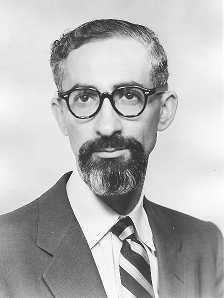
In 1964, philosopher Abraham Kaplan named something called the Law of the Instrument. It's a simple idea: when you only have one tool, you start treating every problem like it needs that tool. Two years later, psychologist Abraham Maslow made the idea famous with a much punchier line, of, "If all you have is a hammer, everything looks like a nail."
Golfers do this constantly with their mental game. They search for that one magical trick that works, a breathing technique (hi, Huberman!), a mantra, a swing thought, and they reach for it every single time something goes wrong. Bad tee shot? Same fix. Nerves on the first tee? Same fix. Slow start? Same fix. One tool, every job.
The problem is golf never gives you the same problem twice. A three-putt isn't the same problem as a bad lie in the trees. First-tee nerves aren't the same problem as frustration after a string of bogeys. Different situations call for different tools. If you only carry one, you'll keep using it for problems it was never built to fix.
Build The Toolbox

Here's what a well rounded mental game toolbox might look like in the game of golf.
For nerves before you tee off: your breath. A few slow exhales, longer than your inhale, will calm your nervous system faster than any thought will.
For a bad shot you need to move past: a bounce-back routine. Something small and physical like a breath, a phrase, or a shaking out of your hands. All of which tells your brain the last shot is over and this one is new.
For staying present between shots: a cue word. One word you come back to when your mind starts wandering to the scorecard or the shot you just hit.
For a rough start to the round: a reframe. Not "I'm playing bad," but "I've got 14 holes to turn this around." Same round, different story.
None of these tools replace each other. They each solve a different problem.
But let's not overcomplicate this. Too many tools becomes a distraction and actually gets in the way of your performance.
The toolbox is your reserve. You can only carry a few tools into a round. This is what I call your Core Four.
Your Core Four

Neuroscience shows us your brain can only hold three to five specific thoughts at once. Bringing the whole toolbox with you into a round is asking for cognitive overload.
Your Core Four is the answer.
Your Core Four are four actions, behaviors, or habits that, when you perform them consistently, give you the best chance possible of playing great golf.
A Core Four example from athletes I've worked with:
Big body language
Say your landing spot out loud during your pre-shot routine
Deep breathing at every pause.
Smile in between shots
These four items become their anchor for the entire round. Time and time again, they’d relentlessly return to these core tenets.
Bad break? Feel it, accept it, back to your Core Four — big body language.
Blown-up hole? Feel it, accept it, back to your Core Four — deep breathing, specifically.
Your Core Four is your process, defined. Or rather, translated into action.
Build your toolbox, select your Core Four for the job, and go play some golf.
And if you’d like to create your Core Four together, please schedule a discovery call and let’s see how mental skills coaching will benefit your game.
